
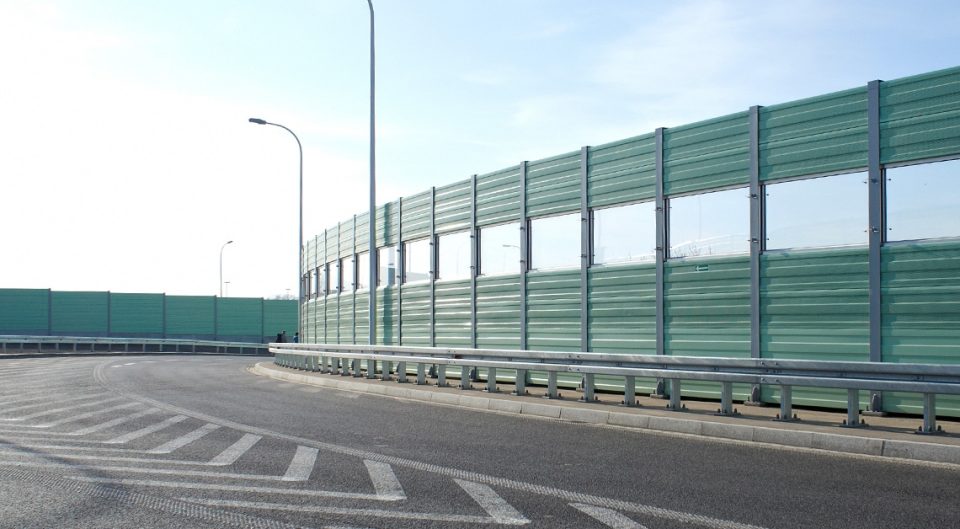
On paper, noise control looks neat and predictable.
You check the specs, see the expected decibel reduction, install the system, and assume you’ll get roughly the same result on-site.
But once you’re actually standing in the middle of a live construction project, things feel very different.
The noise is more chaotic, the environment is constantly changing, and somehow, even with a noise-absorbing barrier in place, sound still finds a way to travel further than expected.
That gap between theory and reality? That’s completely normal-and it comes down to how real construction sites behave.
The real world isn’t a controlled environment.
Most performance ratings for barriers are based on controlled testing conditions.
That usually means:
- One sound source
- Stable surroundings
- No unexpected interference
Now compare that to a real site.
You’ve got:
- Multiple machines running at once
- Workers moving equipment around
- Materials being handled, dropped, or cut
- Openings and shifting layouts
So instead of one clean sound source, you’re dealing with layers of noise happening all at once.
A noise barrier isn’t just blocking one type of sound-it’s trying to manage a constantly changing mix. That alone makes real performance harder to predict.
Sound behaves… differently on-site.
In theory, sound travels in a straight line, hits a barrier, and gets blocked or absorbed.
In reality, sound is a bit more creative than that.
On a construction site, it can:
- Bounce off nearby buildings
- Travel through small gaps or openings
- Bend over the top of barriers
- Reflect back and forth between tight spaces
So even if your barrier is doing its job, sound may still reach the outside through indirect paths.
This is why a noise barrier system might seem less effective than expected-it’s not failing, it’s just dealing with more complex sound movement.
Small installation details make a big difference.
Here’s something that often gets underestimated: installation quality.
In theory, barrier performance assumes everything is perfectly installed.
But on-site, small things happen:
- Panels don’t align perfectly
- Gaps form between sections
- Ground surfaces aren’t level
Individually, these don’t seem like major issues.
But for sound? They matter a lot.
Even a small gap can act like an escape route, reducing the overall effectiveness of the system.
That’s why two identical noise barrier systems for construction can perform very differently depending on how they’re installed.
Placement matters more than specs.
It’s easy to focus on material specs-thickness, density, absorption ratings.
But on-site, placement often matters just as much, if not more.
For example:
- A barrier placed too far from the noise source loses effectiveness
- A barrier that doesn’t block the direct line of sight won’t perform as expected
- A barrier that’s too low allows sound to travel over it
In some cases, a well-positioned barrier can outperform a higher-spec one that’s placed poorly.
So it’s not just about what you install-it’s about where and how you install it.
Multiple noise sources complicate everything.
In testing environments, barriers are usually measured against a single source.
But on a real construction site, that’s rarely the case.
You might have:
- A generator running
- Workers drilling
- Materials being cut
- Vehicles moving in and out
All at the same time.
This creates overlapping sound layers coming from different directions.
So even if a barrier reduces one source effectively, other sounds can still pass through or around it.
That’s why real-world performance often feels less consistent.
The site keeps changingand so should the setup.
This is a big one.
Construction sites are constantly evolving:
- Work zones shift
- Equipment gets relocated
- New structures go up
But sometimes, the barrier setup stays exactly the same from start to finish.
That’s where performance starts to drop.
A barrier that worked well in one phase might not be in the right place anymore in the next.
This is why noise barriers on-site are designed to be flexible. They need to move and adapt along with the project.
Weather and wear affect performance too.
In theory, materials perform under stable conditions.
- Heat and sunlight
- Rain and moisture
- Wind pressure
- General wear over time
These factors can:
- Reduce material effectiveness
- Loosen installations
- Create small openings or weak points
Over time, even a well-installed barrier may not perform the same way it did on day one.
Expectations don’t always match reality.
Another reason for the gap is expectation.
Theoretical values often suggest a clear number like a certain level of noise reduction.
But those numbers assume ideal conditions.
In real life:
- Noise reduction varies across different parts of the site
- Some areas perform better than others
- Results change depending on activity and layout
So if the outcome feels “less than expected,” it doesn’t mean the barrier isn’t working.
It just means the environment is more complex than the test scenario.
Final Thoughts
A noise barrier doesn’t fail just because it performs differently on-site than it does on paper.
It’s still doing an important job-reducing, redirecting, and controlling sound in a very dynamic environment.
The key is understanding that real performance depends on more than just material specs.
It comes down to:
- How well it’s installed
- Where it’s placed
- How often is it adjusted
- How the site evolves over time
Once you look at it that way, the gap between theory and reality starts to make more sense.
And instead of chasing “perfect” performance, the focus shifts to something more practical-making noise control work as effectively as possible in real, everyday construction conditions.
